
Calm Beach Photography: Tips for a Relaxed Session

Table of Contents
Last Updated: September 16, 2026
Why a Calm Approach Changes Everything
Calm beach photography starts with a simple idea: the best portraits come from relaxed people, not perfect poses. At Coastal Heirloom Studio, we've learned that a calm beach photography session produces images families actually want on their walls, because the emotion is real and the tension is gone.
Most beach photo sessions fail for a predictable reason. The photographer rushes. The family stands in a stiff row. The kids squirm. Everyone leaves sandy, sweaty, and relieved it's over.
That's not a photography problem. It's an experience problem.
A calm session flips the sequence. Instead of chasing poses, you let people settle into the environment first. Feet in the sand. Wind in the hair. A few minutes to breathe before anyone says "smile."
The result is portraits that feel like a memory instead of a performance.
Key Takeaway The quality of a beach portrait depends less on camera settings and more on how comfortable your subjects feel in the first ten minutes.
Best Time of Day for Beach Photography
The best time of day for beach photography is the hour after sunrise or the hour before sunset, when the sun sits low and light turns soft and warm. Midday sun creates harsh shadows and squinting, which no amount of editing fully fixes.
Golden Hour and Coastal Light
Golden hour is the window of soft, warm light just after sunrise or just before sunset. On the coast, that light bounces off the water and sand, filling shadows and giving skin a natural glow.
For coastal photography, golden hour does three things at once. It lowers contrast so faces stay evenly lit. It warms the color temperature without looking orange. And it gives you a clean, uncluttered background as the sun drops toward the horizon.
Tide charts matter as much as the clock. A rising tide can swallow your shooting spot mid-session, so check the schedule before you pick a time.
Pro Tip Arrive 20 minutes before golden hour starts. The light shifts fast, and the first ten minutes are often the best of the whole session.
How to Pose for Beach Pictures Without Feeling Stiff
Learning how to pose for beach pictures is less about memorizing positions and more about giving people something to do. Movement is the antidote to stiffness. But movement alone does not fix a nervous subject, and nervousness, not bad posing, is what actually ruins most beach portraits.

Movement and Natural Interaction
Static poses read as tense on camera. Give your subjects an action instead.
Walk together and look at each other, not the lens
Hold hands and swing arms gently while walking
Whisper something funny to the person beside you
Pick up a shell and show it to a child
Turn toward the water and let the wind do the rest
The Calm-First Sequence Most Guides Skip
The keyword here is calm, and calm is a sequence, not a mood. Most photographers try to pose people in the first five minutes, while everyone is still self-conscious. That is backwards.
A working sequence looks like this:
Arrival and orientation (first 5 minutes). No camera. Point out the water, the light, where you will be standing. Let people look around. This single step removes most of the stiffness before it starts.
Warm-up frames (minutes 5-10). Shoot the least self-conscious subject first, usually a child, or the person who volunteered for the session. Early frames are throwaways; treat them that way and say so out loud. "These are just tests" lowers the stakes.
Movement prompts (minutes 10-25). Now run the walking, holding-hands, and whispering prompts above. Subjects are warm and the camera is no longer a stranger.
The hero frames (minutes 25-40). This is when you ask for the full-group and the parent-and-child combinations. Energy is still high, but nerves are gone.
Wind-down (last 10 minutes). Let kids dig. Shoot the candid frames. These often outperform everything planned.
What to Say When Someone Freezes
Every session has one person who goes rigid the moment the lens points at them. A few lines that reliably work:
"Look at [partner's name], not at me, tell them something you did last weekend."
"Walk toward me and complain about the sand. I'll shoot the whole time."
"I'm going to take ten frames. You only have to like one."
Pro Tip Say the words "these are just tests" before your first ten frames. It is the single fastest way to drop a subject's shoulders out of their ears.
Posing for Couples Versus Groups
Couples relax fastest with a task that requires eye contact, walking and talking, foreheads together, a whispered joke. Groups relax fastest with a task that requires no eye contact at all, walking in a line, looking out at the water, counting down from three and turning on the last beat.
Watch Out Do not save the full-group photo for the end of the session. By then, kids are tired and adults are distracted, and the one image everyone wanted is the one you cannot reshoot.
Why This Beats Memorizing Poses
A pose library gives you shapes. A calm sequence gives you people. The shapes only work once the person inside them has stopped performing, and that takes minutes, not seconds. Build the minutes into the session plan and the poses take care of themselves.
What to Wear for Beach Family Photos
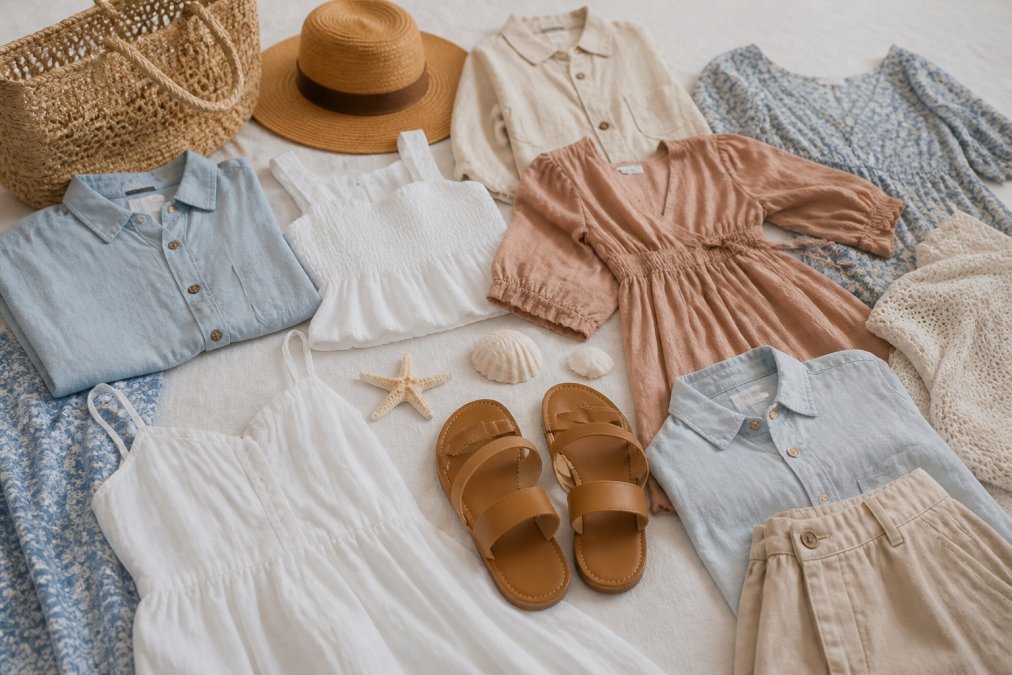
The answer to what to wear for beach family photos is simple: soft, tonal colors that complement the sand and water without competing with them. Think creams, muted blues, sage, and warm neutrals.
Coordinating Without Matching
Matching outfits went out of style for a reason. Everyone in identical white shirts looks like a catalog page, not a family.
A few practical notes for a coastal session:
Avoid large logos and busy patterns
Skip neon; it reflects color onto nearby skin
Bare feet beat shoes on the sand every time
Bring a light layer for wind and cooler evening air
Keeping Kids and Groups Comfortable On the Sand
Children stay engaged when the session feels like play, not a photo shoot. That's the whole game.
What Happens After Your Calm Beach Photography Session
Post-session care protects both your images and your gear, and it is the step most guides skip entirely. Salt spray and fine sand are the two real threats, and both cause damage slowly, which is why the routine matters more than any single heroic cleaning.
A Post-Shoot Gear Routine That Actually Works
Do this within an hour of leaving the beach, before you pack the bag away for the night.
Do not change lenses on the beach. If you must, turn your back to the wind and hold the body face-down. Most sensor grit on coastal shoots comes from one careless lens swap.
Brush, do not wipe, first. Use a soft lens brush or a clean, dry microfiber to lift sand off the barrel, the lens hood, and the body seams. Wiping sand before brushing it off is how lenses get scratched.
Wipe the glass with a damp microfiber, then a dry one. Salt residue is invisible once dry but etches coatings over time. A microfiber lightly dampened with distilled water lifts it; a dry microfiber finishes the job. Never use a shirt.
Check the tripod feet and the strap. Sand grinds inside tripod leg locks and inside strap adjusters. Rinse tripod feet with fresh water and let them air-dry fully extended.
Air-dry the bag open overnight. A closed bag traps humidity against the gear. Leave it unzipped in a dry room.
Do a sensor check the next morning. Shoot a blank wall at f/16 and look for dark spots. If you see them, that is a cleaning, not a reshoot.
Watch Out Never rinse a camera body under a tap. Fresh water on the outside of a weather-sealed body is fine; fresh water inside the body is a repair bill.
Editing Beach Images: The Three Problems Nobody Warns You About
Beach files fail in three predictable ways, and each has a specific fix.
Why Hand-Editing Matters More on the Coast
A beach file has more dynamic range than almost any other portrait setting: bright sky, bright sand, dark hair, dark clothing. Automated presets tend to crush one end or the other. Hand-editing lets you hold the highlights in the sky and the detail in the shadows at the same time, which is what makes a coastal image hold up when printed large.
Conclusion
The hardest part of a beach session isn't the light or the location. It's helping everyone relax enough to be themselves in front of a camera.
Frequently Asked Questions
What time of day is best for a calm beach photography experience?
The hour after sunrise and the hour before sunset give the softest light and the fewest people on the sand. Midday sun creates harsh shadows and squinting, which works against a relaxed feel. If your schedule only allows late morning, a photographer can often find shade near dunes or use backlighting to soften the result. Planning around the best time of day for beach photography makes the entire session feel less rushed.
How do I avoid looking stiff in beach portraits?
Movement is the antidote to stiffness. Walk, sway, hold hands, or look at each other instead of the camera. A skilled photographer will give you simple prompts rather than rigid poses, so your body has something natural to do. Wearing comfortable clothing you can move in also helps. The goal is not perfection; it is capturing how you actually relate to each other.
What should we wear for a calm, editorial beach photo shoot?
Choose soft, muted tones that complement the sand and water: cream, sage, dusty blue, blush, and warm neutrals. Avoid large logos, neon colors, and busy patterns that pull attention from faces. Flowing fabrics photograph beautifully in coastal breezes. For groups, coordinate within a palette rather than matching exactly. Comfort matters too, especially for children who need to move freely on the sand.
How do you keep young children relaxed during a beach photography session?
Let them be children. Running, digging, and splashing are not interruptions; they are the best material for genuine photographs. An unhurried session with one family at a time means there is no clock pressuring anyone. Bring snacks, keep the schedule loose, and let the photographer follow the child's energy rather than fighting it. The most treasured images usually come from unscripted moments.

Comments