
Best Outfits for 30A Beach Portraits: 2026 Style Guide

Table of Contents
Why Outfit Planning Makes or Breaks Your 30A Beach Portraits
Best Color Palettes for Beach Photos: Earth Tones and Dusty Pastels
Coordinating Family Beach Outfits Without Looking Matchy-Matchy
Dresses vs Jumpsuits for Beach Maternity Photos: What Works Best
Fabric Choices for Beach Weather: Linen, Cotton, and Breezy Blends
Footwear, Accessories, and What to Avoid for 30A Beach Portraits
Last Updated: September 15, 2026
Why Outfit Planning Makes or Breaks Your 30A Beach Portraits
The single biggest factor separating a forgettable snapshot from a framed heirloom isn't the camera, the light, or even the pose. It's what everyone is wearing. At Coastal Heirloom Studio, we've watched thousands of frames come together along this stretch of coastline, and the sessions that produce timeless 30A beach portraits almost always share one thing: families who planned their wardrobe before they packed the car.
Outfit planning is the practice of coordinating color, fabric, and silhouette across a group so the final image reads as one intentional composition rather than five separate outfits standing near each other. Get it right, and the eye lands on faces and connection. Get it wrong, and the eye lands on clashing patterns and stiff collars.
Below, we'll walk through the exact palette, fabric, and styling decisions that make coastal portraits work, including the color-theory shortcuts most families never hear about.
Key Takeaway The best 30A beach portraits start with wardrobe decisions made weeks before the session, not the morning of. Color and fabric choices matter more than any individual garment.
Best Color Palettes for Beach Photos: Earth Tones and Dusty Pastels
Earth tones and dusty pastels consistently outperform every other palette against white sand and blue water. Soft olive, sage, warm neutrals, and muted blues let the coastal environment stay the star while keeping skin tones natural and flattering.

Here's the framework we give every family: pick two to three anchor colors, then let each person wear a different shade within that range.
Palette | Anchor Colors | Best For |
Warm coastal | Cream, sand, soft olive | Golden-hour sessions |
Dusty pastel | Sage, dusty blue, blush | Families with young children |
Deep neutral | Warm taupe, slate, ivory | Larger multi-generational groups |
Stark white is the most common mistake. It blows out under bright sun and reflects harshly off sand. Cream, ivory, and off-white photograph far better.
Color Theory for Skin Tones: Finding Your Family's Best Shades
Warm undertones glow against sage, olive, and warm neutrals. Cool undertones pair beautifully with dusty blue, soft gray, and muted lavender. A common approach is to hold fabric swatches near each face in natural light before committing. If a color makes the skin look gray or washed out, it's the wrong shade for that person.
Coordinating Family Beach Outfits Without Looking Matchy-Matchy
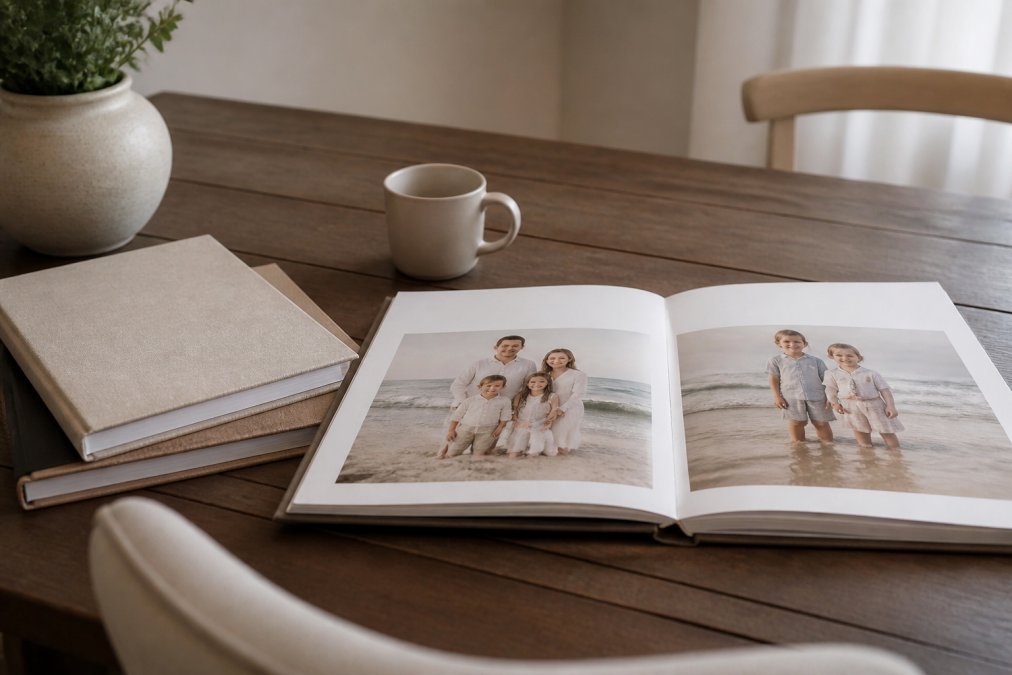
Coordinated outfits share a palette, not a uniform. The goal is visual harmony, where each person looks like themselves but the group reads as one.
Start with one "lead" outfit, usually a parent or the person wearing the most pattern. Build everyone else around those colors using solids and subtle texture. Texture layers, like a linen overshirt or a chunky knit, add depth without adding competing prints.
Avoid identical matching sets for anyone over age five. They flatten the image and erase personality.
Men's and Boys' Styling: Linen Shirts, Shorts, and Sandals
Men and boys have the easiest job on the beach, and the most room to get it wrong. Linen button-downs in soft olive, sand, or dusty blue photograph beautifully and breathe in the heat. Skip the graphic tees and loud logos entirely; they pull focus and date the image instantly.
Linen shorts or tailored chinos in a neutral tone, paired with leather sandals or bare feet, complete the look. For boys, a simple solid henley or untucked linen shirt reads relaxed and timeless.
Pro Tip Roll sleeves to the forearm and leave the top button open. It photographs more relaxed than a fully buttoned shirt and gives hands something natural to do.
Dresses vs Jumpsuits for Beach Maternity Photos: What Works Best
Flowy maxi dresses win for most maternity sessions, but jumpsuits hold their own for mothers who want a cleaner, more modern silhouette. The deciding factor is movement. Beach portraits live on motion, and fabric that catches the breeze creates the soft, editorial quality that defines coastal elegance.
A high-waisted jumpsuit in chiffon or a lightweight blend gives structure and elongates the body. A maxi dress gives drama and flow. Neither is wrong; they simply photograph differently.
Flowy Maxi Dresses and Chiffon: Movement That Photographs Beautifully
Chiffon, cotton voile, and breezy blends move with the wind instead of fighting it. A soft olive or dusty pastel maxi with a defined waist flatters the bump and creates a natural focal point. Skip stiff fabrics and heavy embellishment; they sit flat and look rigid in motion.
Fabric Choices for Beach Weather: Linen, Cotton, and Breezy Blends
Linen, cotton, and lightweight blends are the only fabrics worth packing for a beach session. They breathe, they drape, and they handle humidity without clinging. But the reason they work is worth understanding, because it changes how you shop.
Natural fibers like linen and cotton absorb moisture and release it quickly, which is why they feel cool against the skin even in high humidity. Synthetics like polyester and rayon blends trap heat and reflect light in a way that reads shiny and flat on camera. Heavy fabrics like denim or wool look out of place against sand and surf, and they hold heat long after the sun goes down.
Chiffon and cotton voile are the workhorses of coastal portrait wardrobes for good reason: they move with the wind instead of fighting it, and they photograph as soft texture rather than stiff structure.
How Fabric Choice Interacts With Coastal Light and Weather
The Gulf Coast light is bright and reflective, and fabric choice determines how that light reads on camera.
Matte vs. shiny. Matte fabrics like linen, cotton, and chiffon diffuse light evenly and keep skin tones natural. Satin, silk blends, and anything with a sheen can blow out highlights and create harsh reflections.
Weight and drape. Lightweight fabrics move in the breeze and create the soft, editorial quality that defines coastal elegance. Mid-weight fabrics hold structure better for jumpsuits and tailored looks. Heavy fabrics sit flat and look rigid in motion.
Humidity and wrinkles. Linen wrinkles, and that's part of its charm, but brand-new stiff linen wrinkles sharply and photographs as creases rather than soft texture. Wash and wear it once before the session.
Wind. Flowy fabrics catch the breeze beautifully, but very lightweight chiffon can blow up unexpectedly. A defined waist or a light layer helps keep the silhouette controlled.
Watch Out Avoid brand-new stiff linen that hasn't been washed. It wrinkles sharply and photographs as creases rather than soft texture. Wash and wear it once before the session.
A Quick Fabric Cheat Sheet for the Whole Family
Fabric | Best For | Watch Out For |
Linen | Button-downs, dresses, shorts | Sharp wrinkles if unwashed |
Cotton voile | Maxi dresses, skirts | Can be sheer in bright sun |
Chiffon | Flowy dresses, overlays | Blows up in strong wind |
Cotton blend | Kids' outfits, polos | Lower drape than pure linen |
Chunky knit | Evening layers, wraps | Too hot for midday sessions |
A common pattern among families who love their final gallery: they build the palette first, then choose fabrics that match the session time.
Key Takeaway Fabric choice is not just about comfort. It determines how light reads on camera, how the outfit moves in the wind, and how the final image feels. Choose matte, breathable, natural fibers in the right weight for your session time.
Footwear, Accessories, and What to Avoid for 30A Beach Portraits
Men's and Boys' Styling: The Section Most Guides Skip
Weather-Specific Adjustments: Humidity, Wind, and Cooler Evenings
Pro Tip Pack a small bag with a lint roller, a few safety pins, and a neutral wrap or cardigan. It solves most last-minute wardrobe issues on the beach.
Budget-Friendly vs. Luxury Sourcing: Where to Shop for Coastal Outfits
Conclusion: Styling for Timeless 30A Beach Portraits
Frequently Asked Questions
What is the 3-3-3 rule for family photo outfits?
The 3-3-3 rule suggests choosing three colors, three textures, and three patterns for your family's outfits. This creates visual interest without chaos. For 30A beach portraits, try soft neutrals like cream and sand, add texture with linen or chiffon, and use subtle patterns like small florals. The goal is coordination, not matching. Each family member wears a variation that feels cohesive but individual.
What are the best color palettes for beach photos?
Earth tones and dusty pastels work best for beach photos. Soft olive, sage, warm neutrals, and muted blues complement the coastal environment without competing with it. Avoid stark white in favor of creams and off-whites, which photograph more softly. These palettes create timeless portraits that feel effortless and elegant against sand and sea.
Should families wear matching or coordinating outfits for beach portraits?
Coordinating outfits look better than matching ones. Matching creates a stiff, dated feel. Instead, choose a shared color palette and let each person wear a variation that suits their style and body type. For example, mom in a flowy maxi dress, dad in a linen button-down, and kids in soft cotton pieces. This approach feels natural and photographs beautifully.
What fabrics are best for beach portrait sessions?
Linen, cotton, and chiffon are ideal for beach portrait sessions. These breezy fabrics move with the wind and photograph well in natural lighting. Avoid heavy synthetic materials that trap heat and look stiff. Linen and cotton keep you comfortable during the session while adding texture to your images. Chiffon adds elegant movement for dresses and skirts.
Are shoes necessary for beach portrait sessions?
Shoes are optional for beach portrait sessions. Many families go barefoot for a natural, relaxed look. If you prefer footwear, choose sand-friendly options like leather sandals or simple flats that complement your outfit. Avoid athletic shoes or anything with heavy treads that might look out of place on the sand. Comfort matters, but so does cohesion with your coastal aesthetic.

Comments