
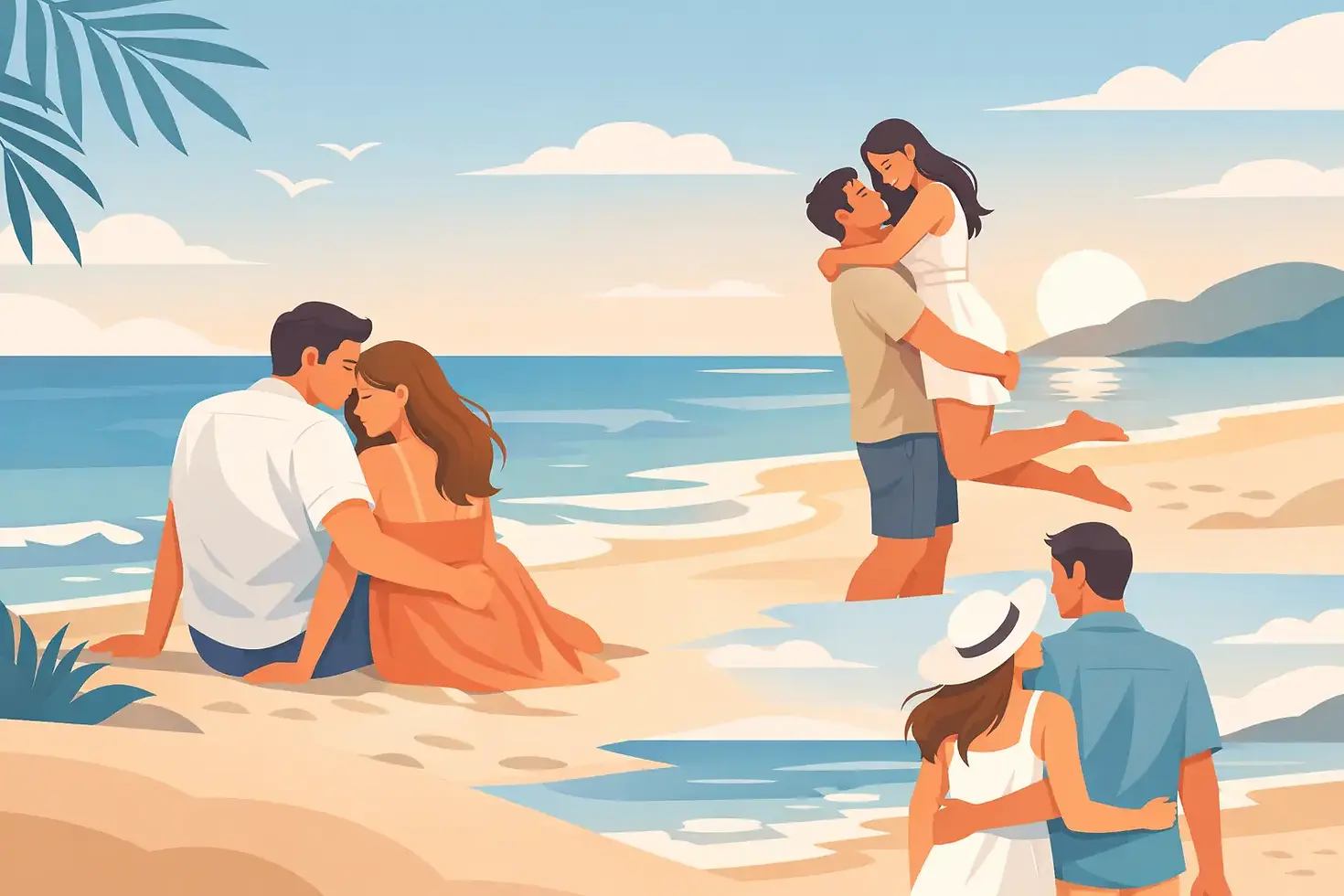
How to Pose for Beach Couples Photos
- Michael Evans

- Jul 6
- 6 min read
The most beautiful beach couples portraits rarely come from stiff smiles and perfectly placed hands. They come from movement, connection, and the quiet way two people naturally lean toward each other when they feel comfortable. If you are wondering how to pose for beach couples photos, the goal is not to look overly posed. It is to look like yourselves, just with a little thoughtful direction and a setting that does part of the magic for you.
At the beach, light shifts quickly, wind has a personality of its own, and even the way you stand changes on soft sand. That is why the best posing feels gentle and intentional rather than rigid. A polished image still needs room for real emotion.
How to pose for beach couples photos without looking stiff
The easiest way to look natural is to stop thinking about posing as holding still. On the beach, stillness can read flat. A soft walk along the shoreline, a hand brushing hair back from your partner's face, or a quiet forehead touch often photographs more beautifully than a formal stance.
Start by standing close - closer than feels normal at first. Most couples leave too much space between them, and the camera notices. Shoulders touching, arms lightly around the waist, or one person resting a hand on the other's chest creates connection immediately. That closeness gives the portrait warmth and keeps it from feeling staged.
It also helps to relax your hands. Tension often shows up there first. Instead of pressing your arms tightly to your sides, let one hand rest naturally on a shoulder, upper arm, or back. Gentle contact photographs as tenderness, while clenched fingers can read as nervousness.
Focus on each other, not the camera
Some of the strongest beach portraits happen when you are not looking directly into the lens. Looking at each other, laughing mid-conversation, or closing your eyes for a quiet moment can feel more intimate and timeless. A few camera-facing images are always lovely to have, but an entire session of direct smiles can start to feel repetitive.
Think of the session less as performing and more as interacting. Walk, pause, pull each other in, and then reset. Small changes in eye line and posture create variety without making you feel like you are cycling through a long list of poses.
The most flattering poses for beach couples
Not every pose works the same way for every couple, and that is where thoughtful direction matters. Height difference, comfort level, wardrobe, and the mood you want all shape what will feel most natural.
A classic starting pose is side-by-side, angled slightly toward one another rather than standing square to the camera. This softens the body line and makes the image feel more connected. If one partner wraps an arm around the other while both look toward the water or at each other, the result is elegant and effortless.
Walking shots are another favorite because they remove pressure. Walk slowly, hold hands, and keep your bodies turned slightly inward instead of facing straight ahead. If you talk while you walk, your expressions will look much more genuine. The beach gives this pose an airy, cinematic quality, especially near the shoreline.
For a more romantic frame, try one partner standing behind the other with arms wrapped softly around the waist. This works especially well when the front partner turns their face slightly back toward the other person. It feels intimate without looking overly formal.
If you want something a bit more playful, lean into movement. Spin gently, sway, or pull each other close as a wave comes in. These in-between moments often become favorites because they feel alive. They are polished, but not precious.
Seated poses that still feel elevated
Sitting in the sand can be beautiful, but it needs intention. The least flattering option is usually sitting flat and facing the camera head-on. Instead, sit at an angle, bend your knees slightly, and lean into each other. One partner can sit slightly behind the other, creating layers and a more refined shape.
If you are seated near the dunes or where the sand is smoother and cleaner, keep your posture tall even in a relaxed pose. Think soft shoulders, long spine, and easy expressions. A seated pose should still feel graceful.
What to do with your body, face, and hands
When couples feel unsure, they usually ask what to do with their hands. The answer is simple - give them purpose. Hold hands, rest one hand at the jawline, place a palm at the waist, or let fingertips graze the shoulder. The beach already creates softness in the image, so your touch should match that energy.
For your face, a small shift goes a long way. Turning slightly instead of facing straight on often creates a more flattering angle. Lowering the chin just a touch helps define the face without looking forced. And if the moment is romantic, do not be afraid to get close. Forehead-to-forehead, temple-to-temple, or nearly-kissing portraits work beautifully by the water because the setting already feels intimate and expansive.
Your posture matters too. Stand tall, but not rigid. Pulling your shoulders back too far can look unnatural, while collapsing forward loses elegance. The sweet spot is lifted but relaxed.
Dress choices affect how your poses photograph
What you wear changes how a pose reads on camera. Flowy fabrics move beautifully in coastal light and breeze, which adds dimension even in simple poses. Softer colors also complement the natural palette of sand, sky, and sea without competing for attention.
For couples, coordination matters more than matching. Outfits should feel visually connected rather than identical. If one person is dressed very formally and the other is too casual, the imbalance can affect the final look of the portrait. Clothing should support the mood you want - romantic, refined, playful, or understated.
Footwear also changes posture and comfort. Many beach sessions look best barefoot, and it usually helps you move more naturally. If shoes are part of the look, make sure they work on sand and do not interrupt the relaxed elegance of the scene.
Use the beach itself to make posing easier
The beach gives you natural cues. The shoreline encourages walking. The dunes create texture and framing. The breeze adds softness and movement. Instead of fighting those elements, use them.
Facing directly into strong wind can make expressions tense and hair difficult to manage, so it is often better to turn slightly or let the wind move through the image from the side. Similarly, standing where waves are constantly reaching your feet can be romantic, but only if you are comfortable with that unpredictability. If not, dry sand may give you more freedom to settle into the moment.
Golden hour is especially forgiving for couples portraits. The light is softer, skin tones look luminous, and poses feel more flattering with less effort. This is one reason many luxury beach sessions are scheduled near sunset. The environment does so much to elevate the final artwork.
How to feel comfortable during your session
The best posing advice is emotional, not just physical. If you feel rushed, self-conscious, or overly aware of the camera, it will show. A well-guided session should create space for you to breathe, connect, and trust the process.
Before your session, talk about the mood you want. Do you picture something windswept and editorial, soft and romantic, or relaxed and joyful? That helps shape posing in a way that feels true to you. A couple celebrating an engagement may want more intimacy and elegance, while anniversary portraits might lean playful and easy.
It also helps to let go of the idea that every image must be perfectly polished in the moment. Some of the most meaningful portraits come from the half-second after a laugh, the pause before a kiss, or the way one person instinctively reaches for the other. At Coastal Heirloom Studio, that blend of gentle direction and genuine connection is what transforms a beach portrait into something lasting.
If you are preparing for your own session, remember this: the goal is not to become different people in front of the camera. It is to step into the light, stay close, and let your connection carry the image.


Comments